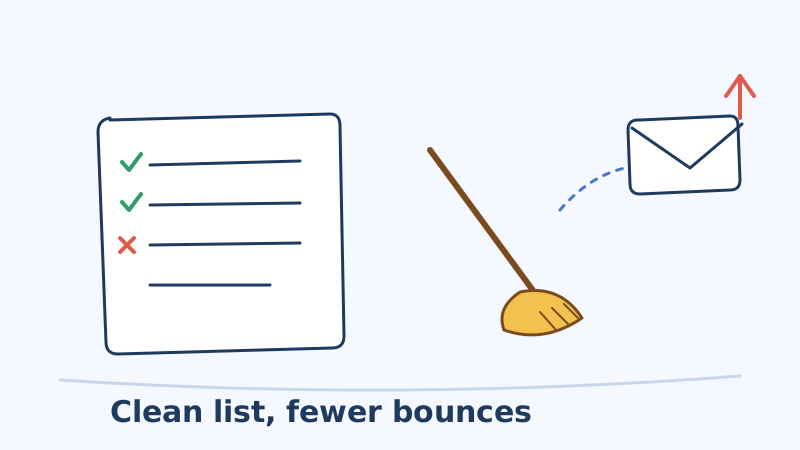
Constant Contact is one of the oldest and most trusted names in email marketing, and small businesses lean on it precisely because it takes deliverability seriously. But that same discipline cuts both ways. Constant Contact actively monitors your bounce and complaint rates, and accounts that keep sending to a dirty list get flagged, throttled, and in some cases suspended after a compliance review.
The reason is the same one every reputable platform faces. Constant Contact sends across shared infrastructure, so one account mailing a stale list can drag down inbox placement for every other sender it shares an IP reputation with. To protect that shared pool, the platform enforces firm limits on how many of your messages are allowed to bounce, and it acts fast when you cross them.
This guide covers how Constant Contact handles bounces, why its built-in list tools only react after the damage is done, and the step-by-step workflow to clean your list before your next campaign sends.
How Constant Contact handles bounces
When an address hard bounces, Constant Contact marks it as non-mailable and stops sending to it. That protects you from repeating the same mistake, but it happens after the send. The receiving server has already logged the failure, and your sending reputation has already absorbed the hit for that campaign.
Soft bounces get a series of retries. After enough consecutive failures, Constant Contact reclassifies the contact and suppresses it too. During those retries you are still hitting mailboxes that keep failing, which providers like Gmail and Outlook read as a sign that you are not maintaining your list.
Here is the core problem: Constant Contact only learns an address is bad by sending to it and watching it fail. It cannot warn you in advance which contacts are risky. By the time a contact shows up as non-mailable, the bounce is already counted against your campaign, and Constant Contact’s own deliverability scoring has already registered it. Drift past its bounce threshold and you risk sending limits, a manual review of your account, or a hold on your ability to send at all.
Why Constant Contact’s built-in tools are not enough
Constant Contact gives you list segmentation, engagement reporting, and automatic suppression of bounced and unsubscribed contacts. Those features are genuinely useful for ongoing hygiene, but they all measure behavior after the fact, not validity before the send. A contact can be perfectly deliverable and simply unengaged, or completely dead while still looking neutral because you have never mailed them.
There is no native pre-send verification inside Constant Contact that confirms whether a mailbox actually exists. The platform trusts that the addresses you import are real. So when you bulk-upload a list from an event signup sheet, a lead magnet, or a spreadsheet a colleague handed you, Constant Contact will happily queue a send to every row, including the fake addresses people type just to claim a free download or enter a giveaway.
That is exactly where a dedicated validation layer belongs: before the contacts ever enter a campaign. Cleaning at the source means the bad addresses never trigger a send, so they never generate a bounce, and they never inflate the contact count you are paying for on a tiered plan.
The clean-before-you-send workflow
Here is the workflow we recommend for keeping a Constant Contact account healthy.
1. Export the list you are about to mail
Pull the contacts from the list or segment you plan to use in your next campaign. If you are onboarding a fresh import, validate it before you upload it to Constant Contact at all. Cleaning outside the platform keeps risky addresses from ever counting against your contact tier or your bounce rate.
2. Validate every address, including the catch-alls
Run the export through an email validation tool that removes hard-invalid addresses, spam traps, and role accounts. The hard part is catch-all domains, the addresses that accept everything at the server level so ordinary verifiers return “unknown” and give up. Those unknowns are where a lot of your real contacts hide, and where a lot of your hidden bounces come from too. A tool like Scrubby is built specifically to resolve catch-all and risky addresses that other verifiers cannot confirm, so you keep the deliverable ones and drop the dead ones instead of guessing.
3. Re-import only the clean, deliverable contacts
Upload the validated list back into Constant Contact. Tag or segment the freshly cleaned contacts so your campaigns and automated series only target verified addresses. This keeps your sends firing at real inboxes and stops the slow bleed of bounces across a multi-email welcome or nurture sequence.
4. Suppress or delete the confirmed-bad contacts
For addresses that came back invalid, either delete them to reclaim your contact count and lower your bill, or add them to your Constant Contact suppression list so they can never re-enter a send. Do not leave them sitting in an active list where a future automation might scoop them back up.
5. Re-validate on a schedule
Email lists decay by around two percent a month as people change jobs and abandon inboxes. Re-run your active Constant Contact lists through validation every quarter, and always validate any new import before its first send. Clean-at-import plus a quarterly sweep keeps your bounce rate low permanently instead of in reactive bursts.
What this does for your sender reputation
Bounce rate is one of the loudest signals mailbox providers use to decide where your mail lands. Keeping it under one to two percent tells Gmail and Outlook that you are a careful sender, which protects inbox placement for your entire list, not just the campaign you happened to clean. On a shared platform like Constant Contact it also keeps you off the internal watchlist that triggers compliance reviews and sending restrictions.
Pairing validation with the deliverability fundamentals compounds the effect. Authenticate your sending domain with SPF, DKIM, and DMARC, keep your sending volume consistent, and prune unengaged contacts on a regular cadence. If cold outreach feeds these lists and you are booking meetings off them, it is worth making sure the demo requests themselves route to real people. Tools like Kali handle calendar-invite outreach so the meetings you fought to earn actually land on a calendar instead of bouncing into a dead inbox.
The bottom line
Constant Contact will send to whatever you give it, which means your list quality is your deliverability. Its native bounce handling only reacts after the reputation damage is done, and its cleanup tools measure engagement rather than validity. Clean your list before contacts enter a campaign, validate the catch-alls that other tools skip with Scrubby, and re-check on a schedule. Do that and your bounce rate stays low, your contact bill stays lean, and your Constant Contact account keeps landing where it belongs: in real inboxes.

Kristel K.
Content Strategist