Email Validation Insights
Expert guides, tutorials, and insights on email validation, deliverability, and lead generation.
Featured Articles
Email Deliverability in 2025: Are Your Messages Reaching Inboxes?
The state of email deliverability in 2025. New challenges, stricter filters, and how to ensure your messages reach inboxes.
 Anirudh Kaushal·January 15, 2025
What Does Accept-All/Catch-All Mean in NeverBounce?
Understanding accept-all and catch-all email results in NeverBounce. Learn what these classifications mean and how to handle them for better deliverability.
 Nick Abraham·November 20, 2024
A detailed comparison of NeverBounce and ZeroBounce email verification services. Compare features, pricing, accuracy, and catch-all handling.
Nick Abraham·November 15, 2024207 articles found
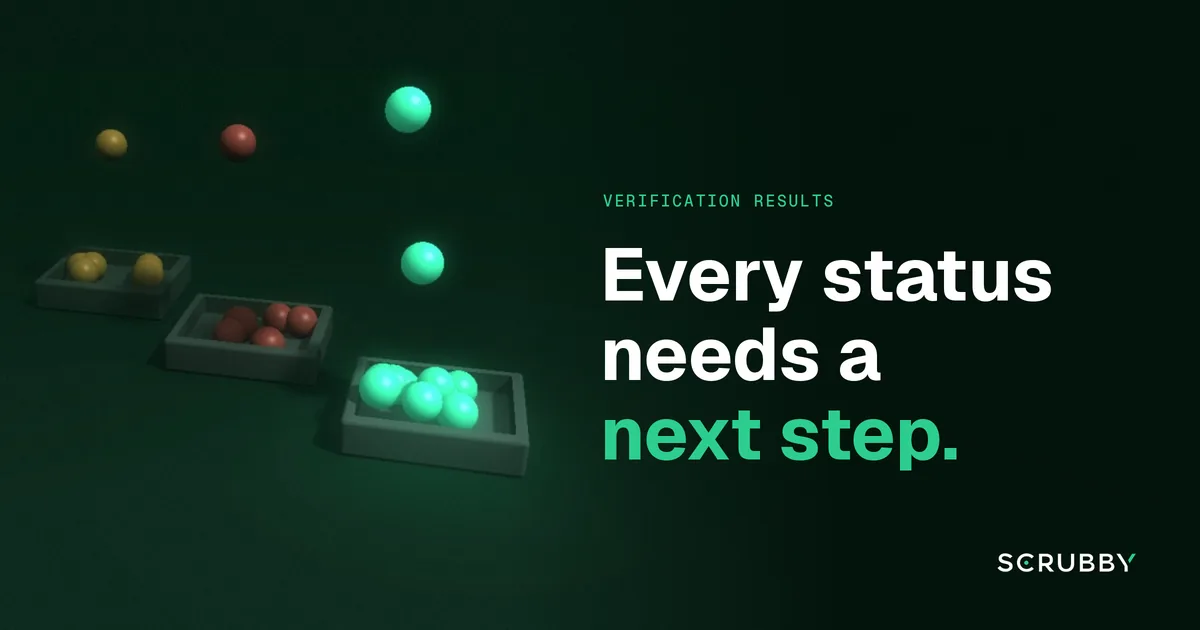
Email Verification Statuses Explained: What to Do With Each Result
Valid, invalid, catch-all, unknown, risky, role, disposable: a verification report is only useful if every status has a next step. What each result actually means, the myths that lead to bad decisions, and a routing table you can apply to any list.
 Amit S.·November 16, 2026
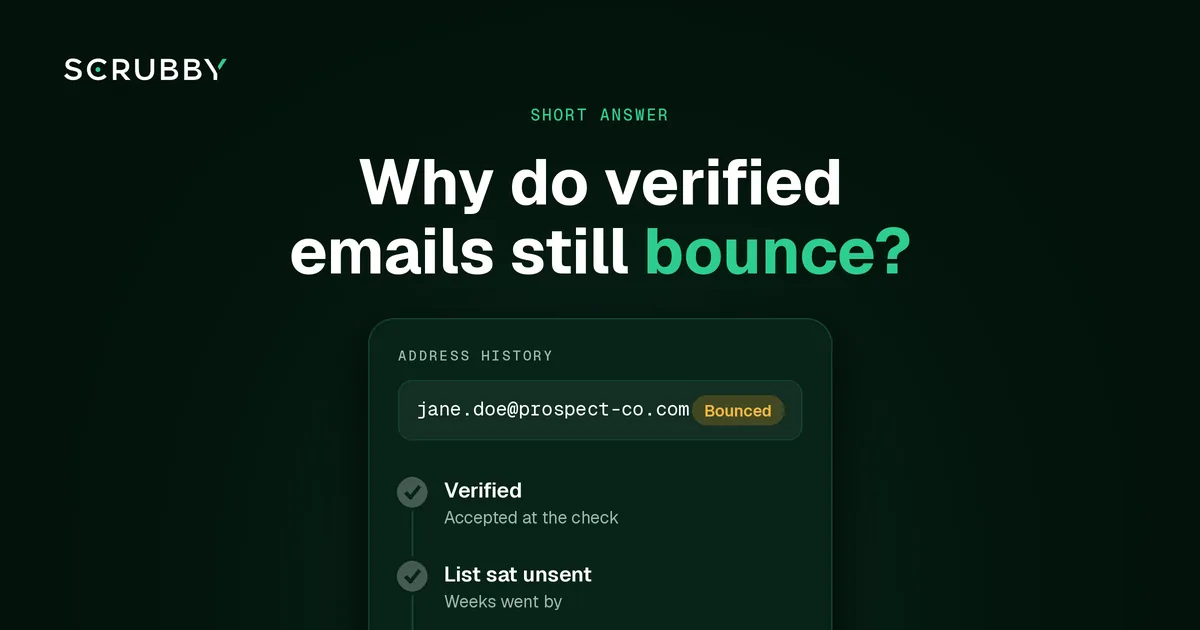
Why Do Verified Emails Still Bounce?
A verified address can still bounce. Results age, catch-all servers accept at the door and reject later, and some bounces have nothing to do with the address at all. How to tell which one you're looking at, and what to do about it.
Amit S.·November 16, 2026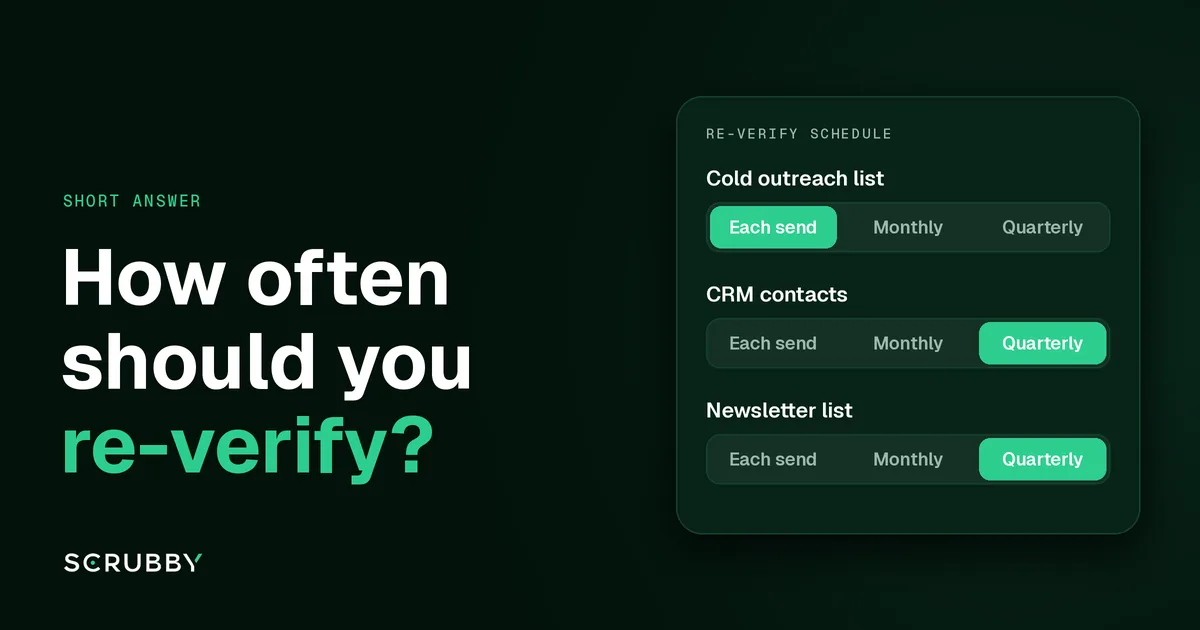
How Often Should You Re-Verify Your Email List?
A verification result is a snapshot, not a permanent label. Re-verify right before any send to addresses that haven't been checked recently, run a full pass on a schedule that matches how you use the list, and verify new records as they arrive.
Amit S.·November 9, 2026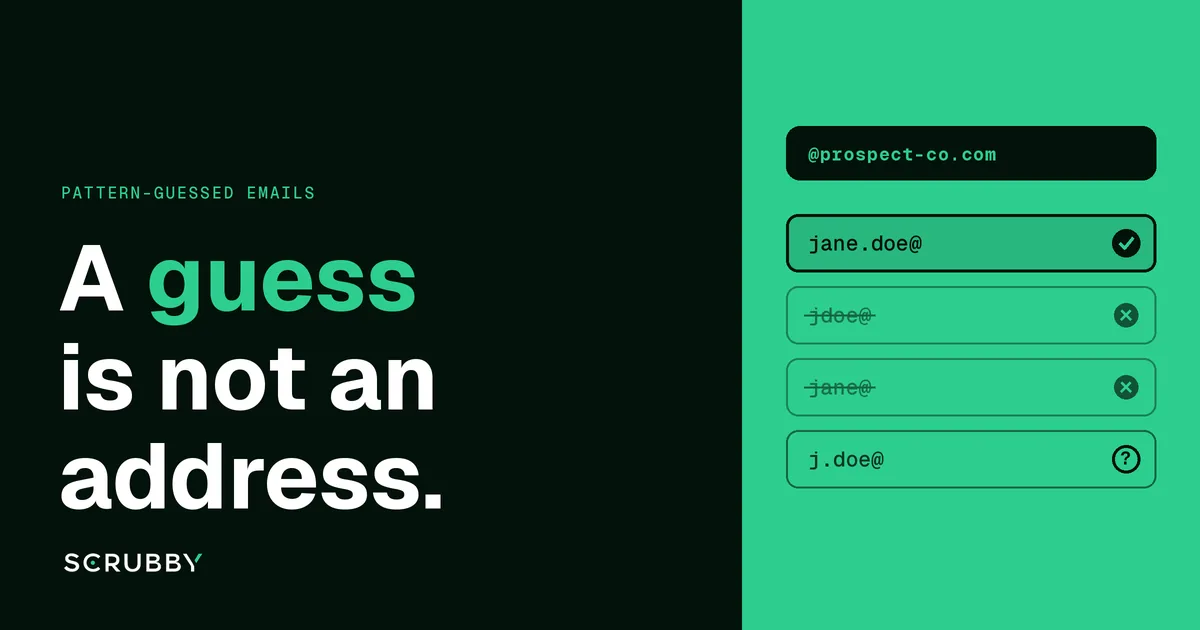
Pattern-Guessed Emails: How to Verify first.last@ Addresses Before You Send
Guessing [email protected] is fast, but a guess is not an address. Why catch-all servers make every pattern look valid, why sending to every permutation hurts your domains, and a verification workflow that settles one best guess per prospect.
Amit S.·November 9, 2026
The Agency Workflow for Verifying Client Email Lists Before Every Campaign
Agencies inherit email data from every client they sign: CRM exports, event lists, purchased files, spreadsheets from a rep who left. Here is a repeatable workflow for verifying client lists before launch, from intake and dedupe to catch-all resolution, client reporting and re-verification.
Amit S.·November 2, 2026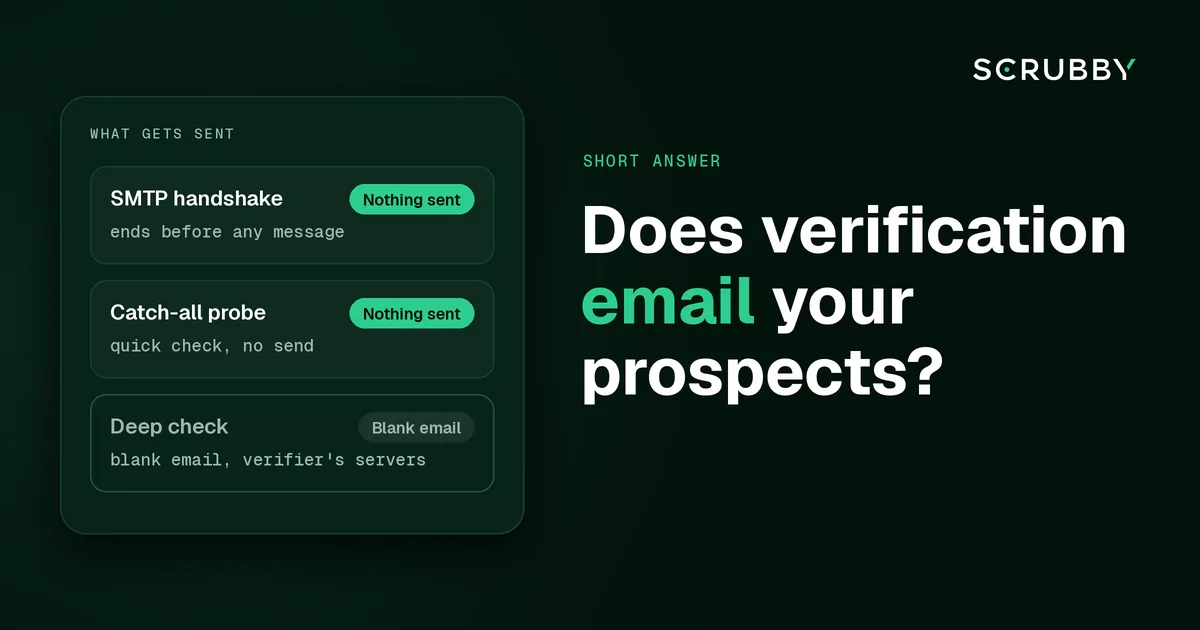
Does Email Verification Send an Email to the Address?
Standard email verification does not send anything. It asks the recipient's mail server about the mailbox and hangs up before a message exists. Send-based checks such as Scrubby's Deep Verification are the exception: they send a real blank message from the verifier's own infrastructure to resolve addresses a handshake cannot.
Amit S.·November 2, 2026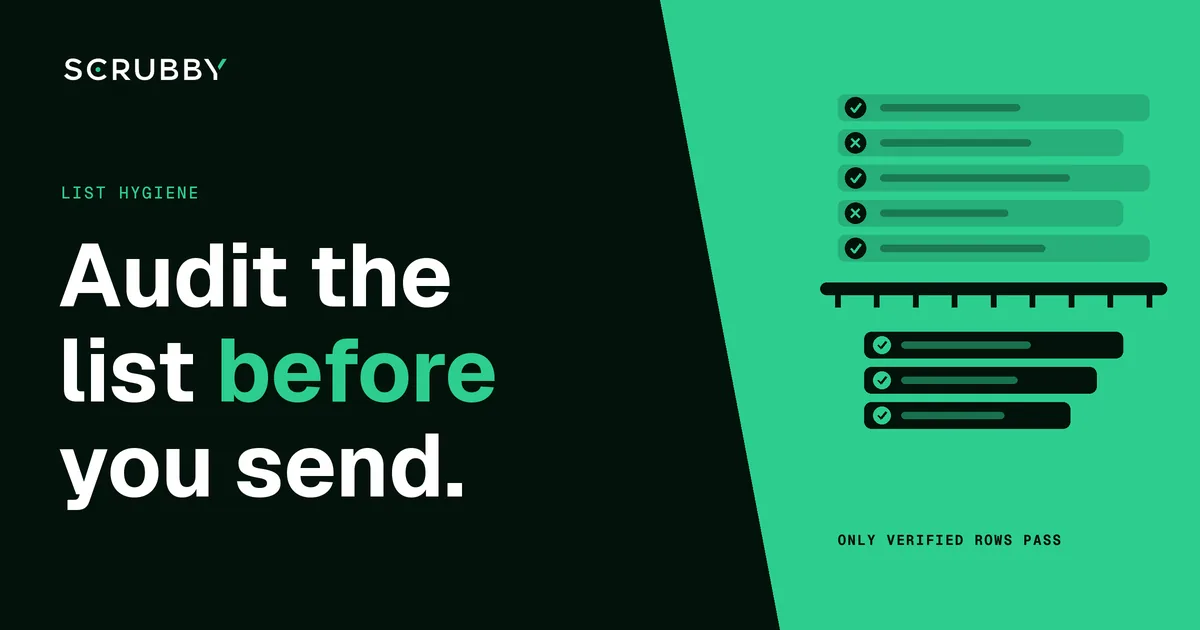
How to Audit a Purchased or Scraped B2B Email List Before You Send a Single Email
A bought, scraped or enriched B2B list arrives looking clean and labelled verified. It rarely is. Here is a step-by-step audit to run before the first send: provenance, structure, duplicates, role and trap risk, validation, and the catch-all segment that every standard check waves through.
Amit S.·October 26, 2026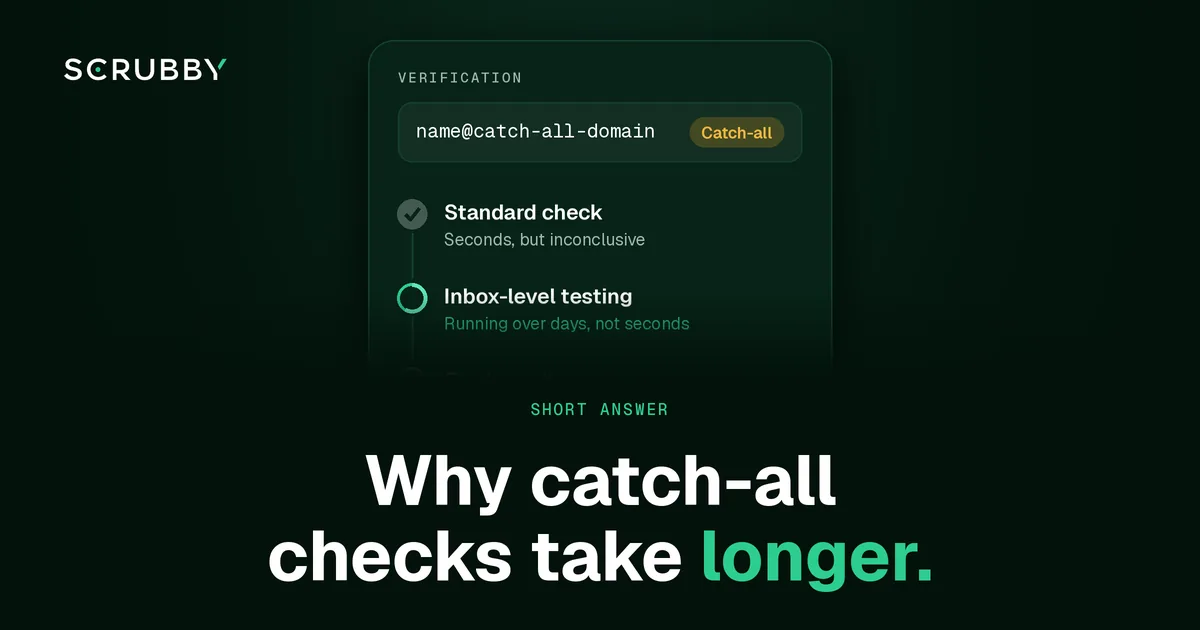
How Long Does Catch-All Email Verification Take?
Standard verification returns in seconds but cannot resolve catch-all addresses. On Scrubby, Quick Verification settles most of them in minutes with a catch-all probe. Deep Verification is for the rest: it sends real email and observes mail server behaviour over 72 hours, with first results in 24 hours and final results in 72 hours.
Amit S.·October 26, 2026
Is It Bad to Send Cold Emails to Catch-All Addresses?
Sending unverified catch-all addresses from your main domain is risky. It is not always bad. When to verify, segment or skip them, and what verifying costs.
Nick Abraham·October 26, 2026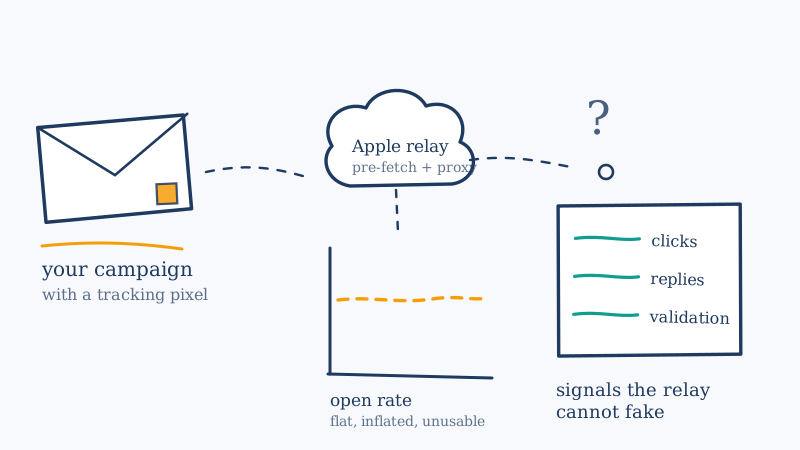
Apple Mail Privacy Protection Broke Open Rates: How to Measure List Health Without Them
Apple Mail Privacy Protection pre-fetches and proxies tracking pixels, which means an open can be recorded for a message nobody read. That quietly ruins engagement scoring, sunset policies, and the habit of using open rate as a proxy for list health. Here is what the relay actually does, which metrics survive it, and how to rebuild list hygiene on signals that cannot be faked.
Amit S.·October 16, 2026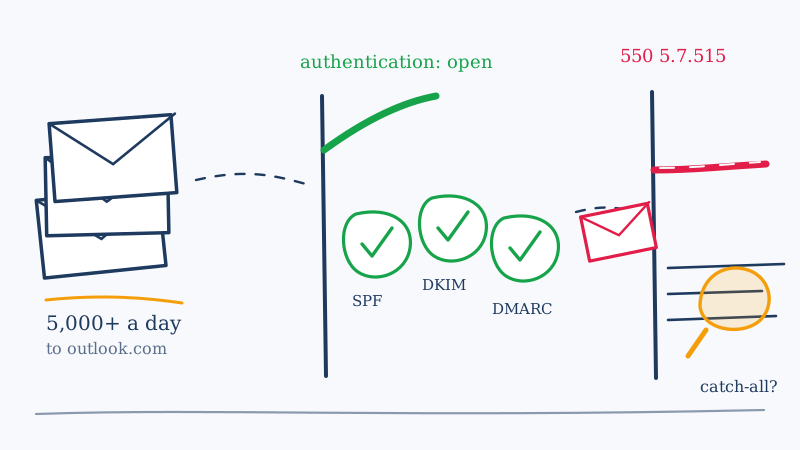
Outlook High-Volume Sender Requirements: What SPF, DKIM, and DMARC Do Not Fix
Microsoft now requires SPF, DKIM, and aligned DMARC from any domain sending more than 5,000 messages a day to Outlook.com. Passing those three checks is the entry fee, not the finish line. Here is what the requirements actually say, how to read a 550 5.7.515 rejection, and why list quality decides what happens after you are compliant.
 Kristel K.·October 15, 2026
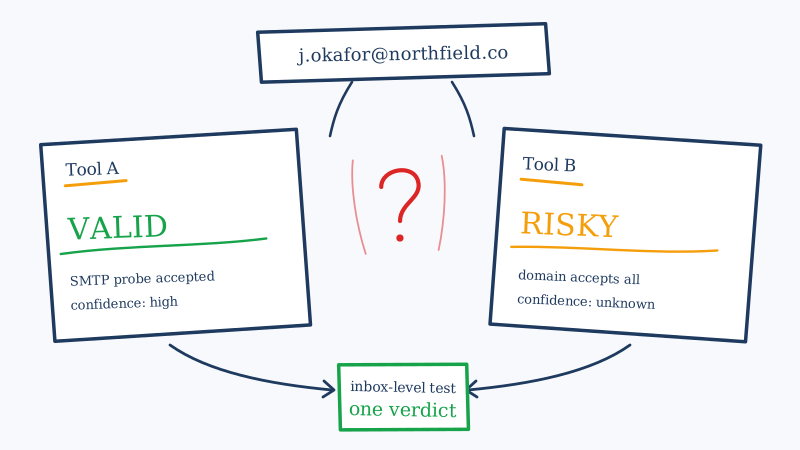
Two Validators, Two Verdicts: How to Reconcile Conflicting Email Verification Results
You ran the same list through two verification tools and got two different answers on thousands of addresses. That is not a bug in either tool. Here is how to read the disagreement, which verdict to trust in each case, and the one reconciliation rule that quietly destroys lists.
 Abhinav·October 14, 2026
Stay Updated on Email Validation
Get the latest insights on email deliverability, catch-all validation, and lead generation straight to your inbox.
No spam. Unsubscribe anytime.