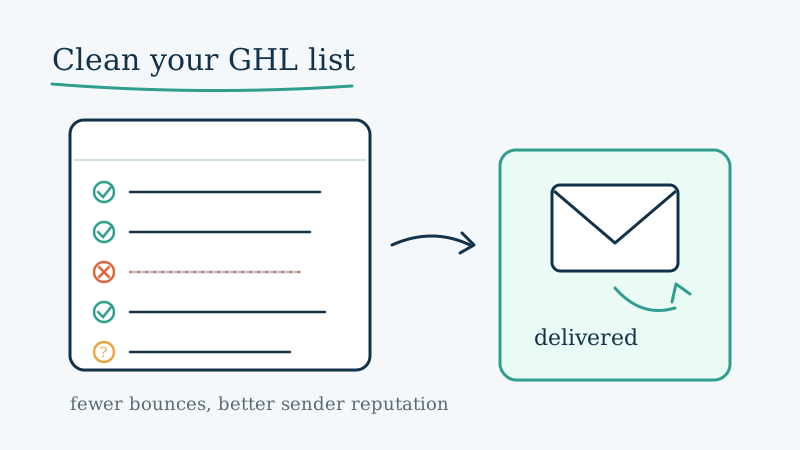
GoHighLevel (GHL) has become the operating system for thousands of marketing agencies, coaches, and local businesses because it bundles CRM, funnels, SMS, and email into one platform. But that all-in-one convenience hides a risk that catches many agencies off guard: GoHighLevel monitors your email bounce and spam-complaint rates closely, and accounts that send to a dirty list get throttled, flagged, or cut off from LC Email entirely.
The reason comes down to how GHL delivers mail. Most sub-accounts send through LC Email (LeadConnector), which runs on shared and pooled sending infrastructure. When one account blasts a stale list and racks up bounces, it drags down deliverability for everyone else in that pool. To protect the shared reputation, GoHighLevel enforces limits on bounce and complaint rates, and it acts quickly when an account crosses the line.
This guide covers how GoHighLevel handles bounces, why its built-in tools only react after the damage is done, and the exact workflow to clean your list before your next campaign or automation workflow triggers.
Why GoHighLevel is strict about bounces
Every email platform that sends on shared infrastructure has to police its senders, and GHL is no exception. LC Email deliverability depends on the collective behavior of every sub-account sending through it. A few things make GoHighLevel especially unforgiving:
- Shared IP pools. Unless you have configured a dedicated sending domain and warmed it properly, your mail leaves through pooled IPs. One agency’s bad list becomes everyone’s problem, so GHL clamps down fast.
- Automated workflow sends. GHL’s biggest strength (triggers, pipelines, and automations that fire email on autopilot) is also its biggest liability. A bad list plugged into an always-on workflow keeps hitting dead addresses long after a one-time blast would have stopped.
- Bounce and complaint thresholds. Mailbox providers like Gmail and Yahoo expect a spam-complaint rate under 0.3 percent and a low bounce rate. Cross those lines and your messages start landing in spam or getting rejected outright, and GHL may pause LC Email on your account to protect the pool.
The takeaway: a dirty list in GoHighLevel does not just hurt one campaign. It can throttle every automation and every sub-account tied to your sending reputation.
Why GoHighLevel’s built-in hygiene is not enough
GHL does give you some tools. It suppresses hard bounces so you do not keep mailing an address that already failed, and it lets you filter contacts by engagement. Those features are useful, but they share one fatal flaw: they are reactive.
Suppression only kicks in after an email has already bounced. By the time GoHighLevel marks an address as invalid, the damage to your sender reputation is already done, because the bounce was recorded by the mailbox provider. If you import a purchased list or a stale export and fire a workflow, GHL will dutifully send to every dead address first, then suppress them afterward. That is backwards.
The other gap is catch-all addresses. A large share of business email today sits behind catch-all (accept-all) domains that accept every message at the SMTP handshake, then silently bounce or discard invalid ones later. Standard verification tools mark these as “unknown” or “risky” and leave you guessing. GoHighLevel has no way to resolve them, so they sit in your list as landmines.
The fix is to validate and clean your list before it ever enters a GHL campaign or workflow. That means using a dedicated validation tool that catches invalid addresses up front and, critically, resolves the catch-all addresses other tools skip. That is exactly what Scrubby is built to do: it verifies risky and catch-all emails that services like ZeroBounce and NeverBounce return as “unknown,” so you keep the deliverable contacts and drop only the truly dead ones.
Step-by-step: clean your GoHighLevel list
Here is the workflow that protects your sender reputation and keeps your automations firing at real inboxes.
1. Export your contacts from GoHighLevel
In your sub-account, go to Contacts, apply any smart list or tag filter you want to clean, and export to CSV. If you are cleaning a specific segment (for example, a stale re-engagement audience or an imported cold list), filter to just that segment before exporting so you are not paying to validate contacts you already trust.
2. Validate the list before you import it back
Run the exported CSV through an email validation tool. A basic verifier will flag obvious syntax errors, dead domains, and known invalid mailboxes. But it will hand back a pile of “catch-all” and “unknown” results, and that is where most agencies lose deliverable leads or, worse, keep risky ones.
Upload the file to Scrubby to resolve those catch-all and risky addresses specifically. Scrubby tells you which accept-all addresses are actually deliverable and which are not, so you are not throwing away good leads or mailing dead ones. For teams running high-volume cold outreach, validating before every send is the single highest-leverage habit for protecting a domain.
3. Segment the results
Split your validated file into clear buckets:
- Valid and deliverable: safe to import and mail.
- Invalid or hard-fail: delete these. Do not re-import them into GHL.
- Catch-all resolved as deliverable: keep these. This is the bucket most tools force you to throw away.
- Risky or unresolved: hold these out of your main sends, or route them to a low-volume, closely monitored workflow.
4. Re-import the clean list and tag it
Import only the valid and deliverable contacts back into GoHighLevel, and apply a tag like validated-2026-09 so you can build smart lists off verified contacts. Point your campaigns and workflows at that tag rather than at the raw contact database. This one habit keeps unvalidated imports from silently leaking into an always-on automation.
5. Set up ongoing hygiene
List cleaning is not a one-time task. Contacts decay at roughly 22 to 30 percent per year as people change jobs and abandon inboxes. Build validation into your routine:
- Validate any new list before importing it into GHL, especially purchased or event lists.
- Re-validate long-lived automation audiences on a recurring schedule (quarterly is a good baseline).
- Watch your LC Email statistics for creeping bounce rates, and clean the moment you see them climb.
Configure a dedicated sending domain
If you are sending meaningful volume through GoHighLevel, do not rely on the shared pool. Set up a dedicated sending domain in LC Email and authenticate it properly with SPF, DKIM, and DMARC records. This isolates your reputation from other GHL accounts, but it also means the responsibility for that reputation is entirely yours. A dedicated domain sending to a dirty list will burn just as fast, so the cleaning workflow above matters even more once you go dedicated.
Warm the new domain gradually before you point high-volume workflows at it, and keep your list clean throughout the warmup. If you are also running cold outreach or booking demos off these lists, pairing a clean list with a calendar-invite outreach tool like Kali keeps your follow-up landing in front of real prospects instead of bouncing into the void.
The bottom line
GoHighLevel gives agencies enormous leverage, but that leverage cuts both ways: a dirty list plugged into an always-on workflow can quietly torch your sender reputation across every sub-account you run. GHL’s built-in suppression only reacts after addresses have already bounced, and it cannot resolve the catch-all addresses that make up a large slice of B2B email.
Clean your list before it ever enters a campaign, resolve the catch-all addresses instead of guessing, and re-import only verified contacts. Run your next GoHighLevel export through Scrubby before you hit send, and protect the deliverability your entire agency depends on.

Amit S.
Marketing Lead